Groundtruth
How do you improve a campaign you never tracked?
Your CRM has stages and reply rates for every lead. The reasoning that produced each message is gone the moment it sends, so when a campaign underperforms most of us change the opener and run it again.
Groundtruth is the system of record for your outbound. Everything the agent did, why it did it, what came back, and a way to judge what that adds up to.
The journey, the analyst, and the loop
The console
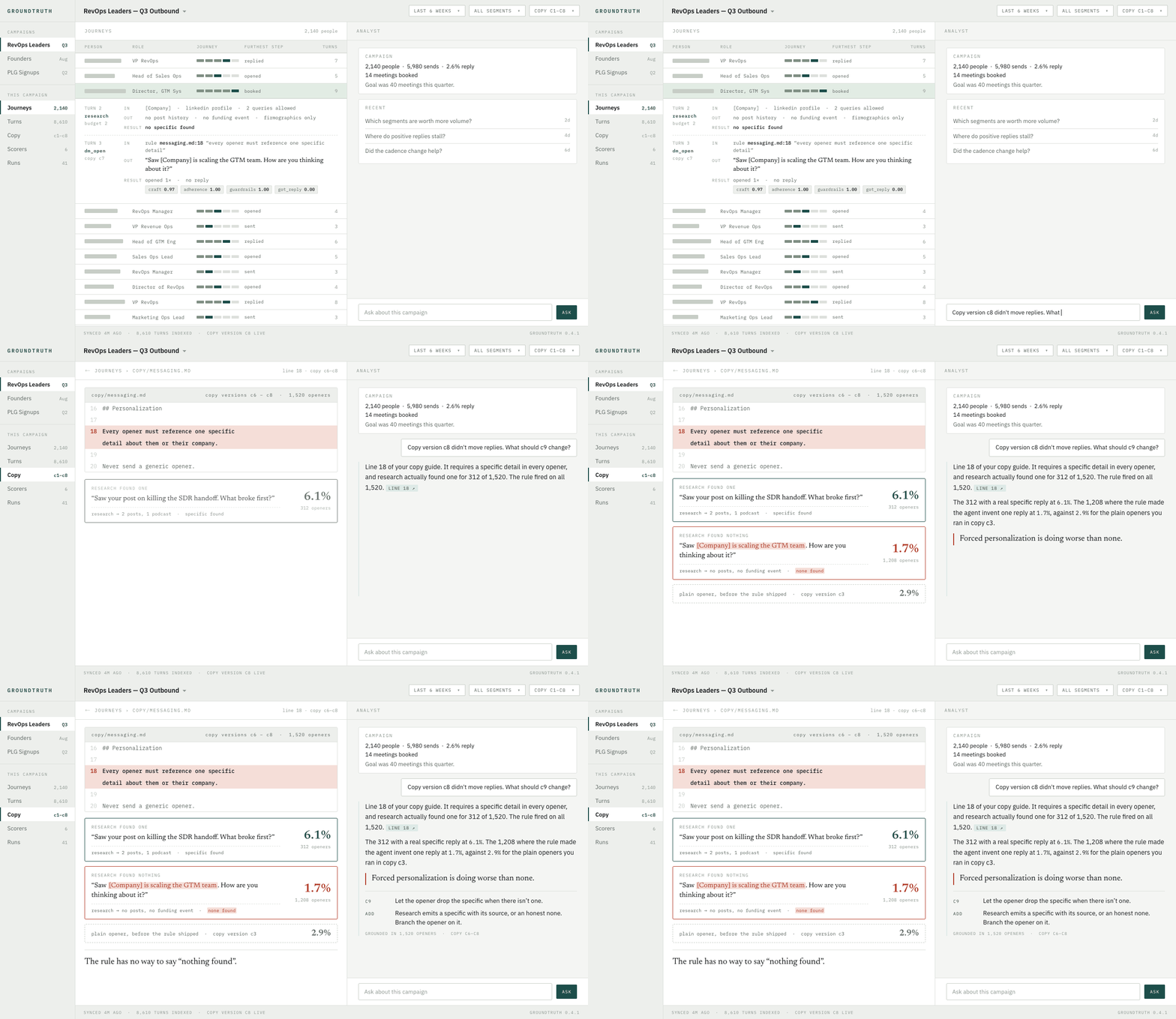
The journey
Every action on a lead becomes one row: what was known, what was chosen and why, what came back, and which copy version was live. Joined by person they are that lead's whole story. Human touches go in too, and nothing is summarized.
The analyst
Point a question at the record in plain language. It reads every journey at once, and every claim comes back with the turns it came from, so you can open them and disagree.
The loop
You decide what to change and edit the guidance yourself. The version bumps, the record starts filling again, and the next read grades that change on replies and meetings.
One lead, start to finish
Most of what is worth knowing only appears at the length of one lead's whole story. Here is one, all of him.
Journey · RevOps Leaders — Q3 · person p_1182
I'll point it at one of your campaigns
If you run outbound and want to see what your own record says, get in touch. I'll wire it up and read the first one with you.
Isn't this just logging?
Mechanically, yes. The difference is what gets recorded and at what grain. Logs answer "what did the system do". These records answer "what did it know, what did it choose, why, and what came back", keyed to a person so a whole journey reconstructs, and stamped with the strategy and copy version in force so a change is attributable to a cohort.
The test I use: could an analyst who was not there reconstruct the campaign and disagree with me about it? On my own campaign the answer was yes, twice, and both times the analyst was right.